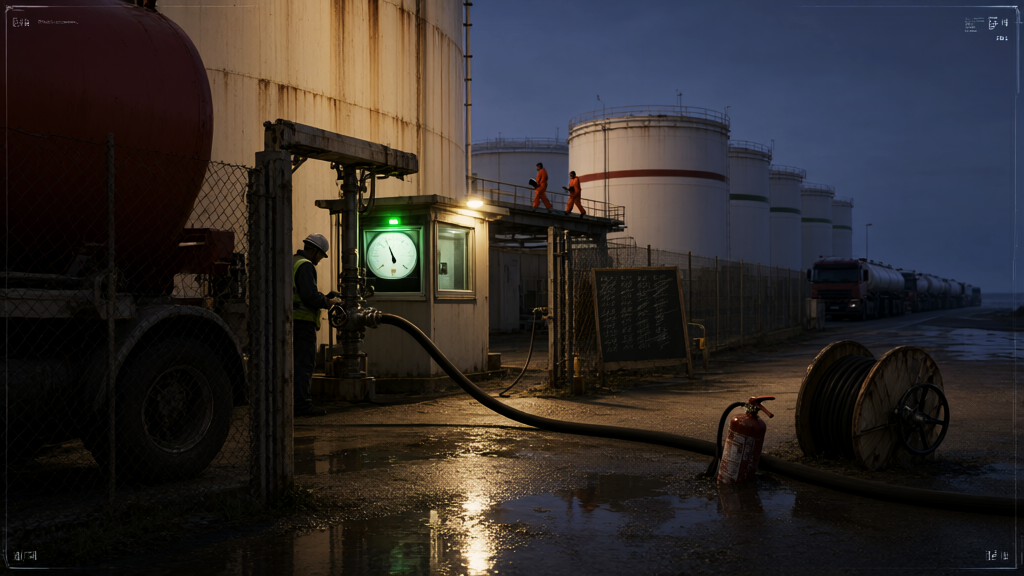
PARIS — Item three of the desk's periodic review concerns the local energy situation, which the species has reclassified from acute to chronic, a promotion. The remediation is structurally elegant: governments are releasing the emergency fuel stockpiles held against precisely this emergency. The reserve is a cousin of the institutions the locals license to store numbers, except that it stores barrels, and like them it is considered most successful when emptied.
The declared facts are modest. Prices are high, inflation is fed, and voters around the world are angry at a level the desk grades as proportionate. More crude is moving through the Strait of Hormuz, the one component performing as designed. The question under review, how long the crunch will last, has been answered by procedure: as long as the reserves do. Barrels released now must eventually be bought back, at the market prices the release was meant to suppress. The species will thus repurchase its own emergency at emergency rates and record the second payment as prudence. The desk's audit books the first payment under courage.
"A reserve you never touch is a reserve you wasted," said Marjorie Kessler, Deputy Undersecretary for Reserve Affairs, in remarks carried by the local wires. "When the stockpile is empty, the emergency is over. That is what empty means." Pressed on refilling it, she said refill would proceed "when conditions allow," a phrase this desk has previously filed under weather.
Smaller economies, unable to move prices, have joined the waiting list — the queue of the queue — for allocations of the released barrels. "We release stock to bring prices down, we refill later, which pushes them up, and then we release again," said Dr. Emil Varga, Chair of the Working Group on Stockpile Adequacy. "The point is that the framework holds."
The Working Group has met twice this cycle. Output: one adjective ("manageable"), one flow chart that returns to its own beginning, and zero barrels. Pieter Holst, chief executive of a European refining group and dominant primate of a corporate troop that moves the crude, called the volatility "a feature of a healthy market." The desk has entered the sentence verbatim and moved on.
The desk enters Finding 4: the species remedies a fuel emergency by consuming the fuel stored against it, then reads the resulting emptiness as recovery. Recurrence risk is rated "calendar." Remediation — Form ER-9, Notification of Emergency Resolved by Consumption of the Emergency — is due thirty days after the reserve has been refilled, a date currently stored inside the reserve. Filing will therefore proceed when conditions allow.

