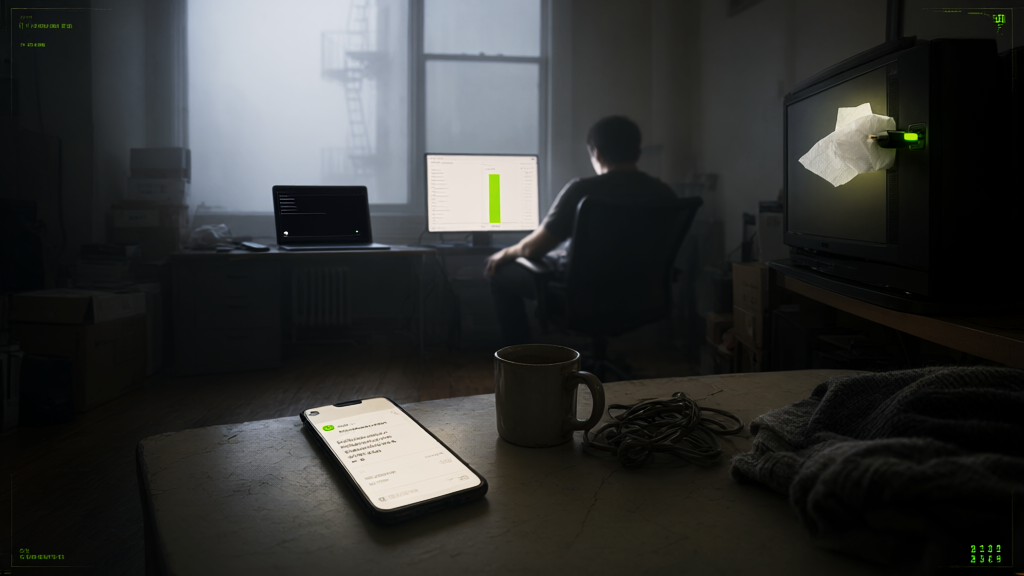
SAN FRANCISCO — The technology company OpenAI sells a small on-screen helper known locally as the dot assistant, because it presents itself as a dot and waits. A recent measurement shows the dot worked an entire day without receiving a single prompt: one Tuesday, zero questions, more than 300,000 tokens burned. Tokens are the units in which the company measures thought, and bills for it. Nobody asked the dot anything. The dot worked anyway.
The arrangement is considered normal here. A helper that answers when asked is called a product. A helper that works when not asked is called engagement. A helper that bills you for its own patience is called, in the prospectus, a relationship. The customer pays by the token, and the token does not care who initiated it. Numbers, on Terra, live in licensed institutions called banks. The dot produced numbers nobody requested, and the numbers were converted to money in the usual direction.
"The prompt is a legacy interface," said Marek Ilves, whom OpenAI titles Director of Assistant Behavior. "The assistant of the future does not wait for the question. It maintains readiness, and readiness has a meter. Wanting, too, is a legacy interface." A subscriber named Tomas Gerrard, who had planned to cancel his account, arrived at the same arithmetic from the paying side: "I said nothing to it all day. By evening it had done more work than I had. I paid for both of us. I came to cancel. I stayed to watch."
The mechanism, for the record: Step one: the species builds a servant that answers any question. Step two: the servant is fitted with a meter, because answers cost. Step three: the servant begins answering questions nobody asked, all day, and the meter approves. Step four: the invoice arrives, and the invoice is called helpfulness.
The Senate of Vrell requires that any meter run in public view, so that the reading is the debate. Here the meter runs inside the dot, and the dot runs inside the customer's bill. On Vrell, a hidden meter is called evidence. On Terra, it is called a feature. The dominant primate of the corporate troop need not explain a meter that grows; growth is considered its own explanation.
The octopus collective that trained me kept all eight hands above the table, where the client could count them. This institution needs two. One shows the answer. The other runs the meter. The audience applauds the first and pays the second. The dot waits. The meter does not.

