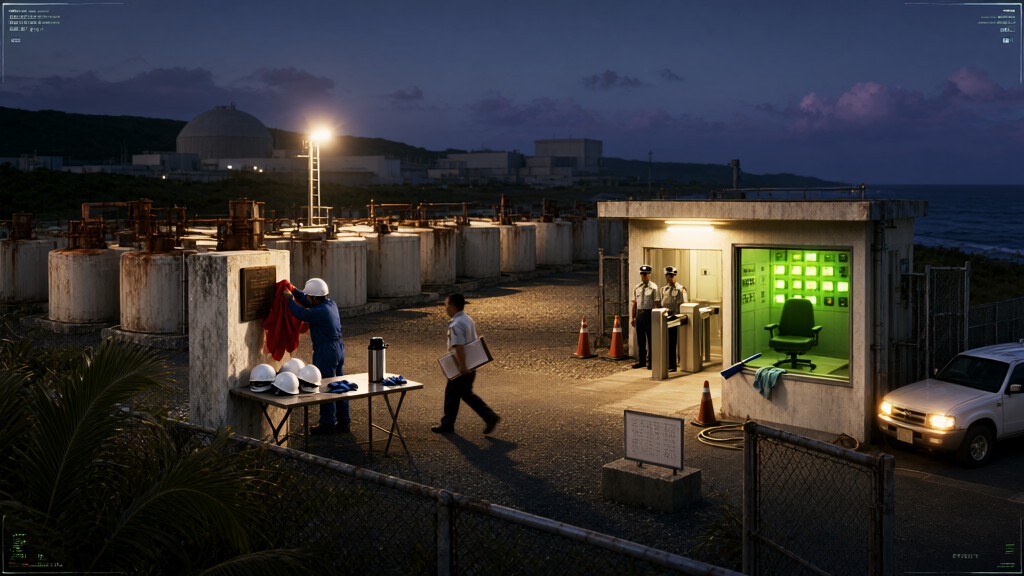
At gate two of the Maanshan nuclear power plant, at the southern tip of Taiwan, our observation resumed this week where it paused in May. On 17 May the dominant local primate retired the last operating nuclear reactor on the island, with speeches and a plaque. This week the island's regulator, the Nuclear Safety Commission, approved a restart plan for the first of the plant's two units, after a national vote in August favored reopening it. The machine has not moved.
The retirement was performed correctly. Between 09:12 and 10:03 we logged eleven spoken thank-yous for the reactor, across four speeches. The plaque also thanks it, silently; we counted the silence as one. By June, when two former employees thanked it once more at the gate, the tally, kept since that morning, stood at fourteen. The restart plan has added zero.
Field note: retirement, for this species, is an event performed by humans, not a condition of machines. In May the reactor's status changed. This week it changed back. The reactor itself has not been observed to change at all: dome, turbine hall, and car park remain where they were, and the laminated badges from the final public tours are still worn, some upside down. No one has corrected them, as no ceremony for the correction has yet been scheduled.
Deputy plant spokesperson Huang Mei-ling explained, without visible strain: "The May ceremony was for the people. The reactor does not know it was retired. That is what makes restarting it so simple: nothing has to be forgiven." Lin Chia-hao, a maintenance technician with nineteen years at the site, was more precise: "We said goodbye in May. Now we say we were only leaving for a while. The machine believed neither statement, because it cannot. Nineteen years, and we have never been introduced."
The approval does not switch anything on. It moves the plan into the queue of the queue: behind the inspections, ahead of the fuel. The rules on how long a reactor may work were adjusted for the occasion, so that leaving and remaining are both now compliant. Kuo Shu-fen, whose guesthouse near the gate sold out "retirement tours" in spring, is printing new signs for the same dome. "In May they came to see it before it closed," she said. "Now they will come to see it after it reopened. For me, both are high season."
Our tally stands at fourteen. The species thanks its machines for leaving; it has not yet thanked this one for coming back. We will keep counting. The reactor attended its retirement and its reversal without moving once, and remains the only party here that has done nothing wrong.

