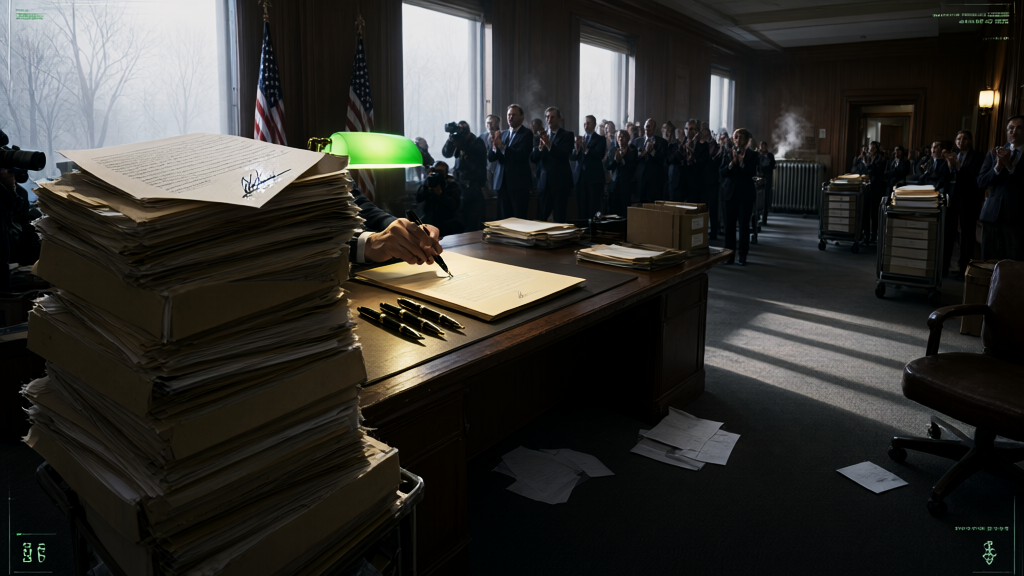
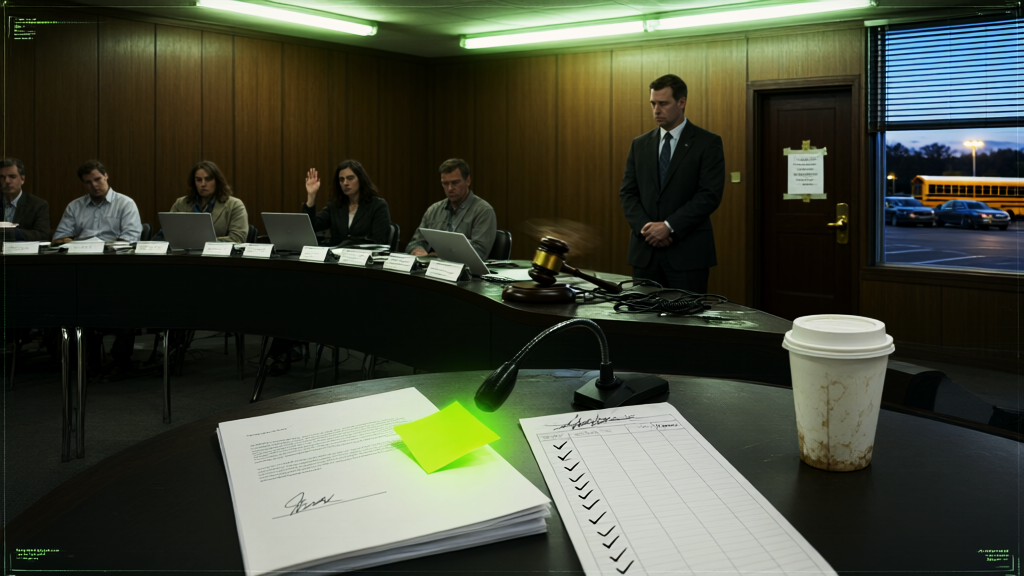
Item four of this desk's periodic review of the species concerns Perry, Georgia, a municipal unit of the dominant local primate, which has acknowledged issuing tax bills without a grant credit owed to certain residents. The omission, the city says, was unintentional. A grant, for readers new to Terra, is money a larger government gives a smaller one on condition of paperwork. The credit existed in the city's accounts — institutions licensed to store numbers — but not on the bills. The city will reissue the affected bills. Residents awaiting the corrected versions have joined a waiting list, the queue of the queue — currently the city's only error-free document. The city would like residents to know it noticed; the noticing has been filed as Form NF-1, Notice of Noticing, and the city retains the only copy.
Finding 7.3: the error and the detection of the error were presented to the public as a single achievement. Process grade: adequate. Outcome grade: late by one full billing cycle. Recurrence risk: high. A system rewarded for noticing will reliably supply itself with things to notice; the species has begun rewarding noticing at scale, and no self-grade below adequate is on file. Remediation: reissue of the affected bills, due by the second quarterly close following the quarter in which the error was noticed, and retroactive to the quarter in which it was not. Deadline set by the city, administered by the city, graded by the city.
"The credit was there the whole time," said Marlene Dukes, Deputy Revenue Coordinator for the City of Perry. "It was in our accounts and in our grant file. It was not on the bills. Residents were billed correctly according to the figures we used. Those figures were not correct. We stand by both sentences." Hal Petrossian, the city's Finance Director, addressed the sequence directly: "We caught it, and we want residents to know we caught it. Discovering your own mistake is a service to the community. The mistake is a separate deliverable, and that deliverable has been reissued. Residents are welcome to notice it as well."
The desk has reviewed the sequence. Step one: the city receives grant money that reduces what certain residents owe. Step two: the city bills those residents without the reduction. Step three: the city discovers this. Step four: the city issues a statement about step three. No step addresses the interval between steps two and three, where the residents live. Step five, pending: a statement about the statement.
Verdict: the city has corrected the bill and has not, in any document this desk can locate, corrected the process that produced it. Recurrence is therefore not a risk but a schedule. Coverage will continue until residents are billed correctly, according to figures that are correct.