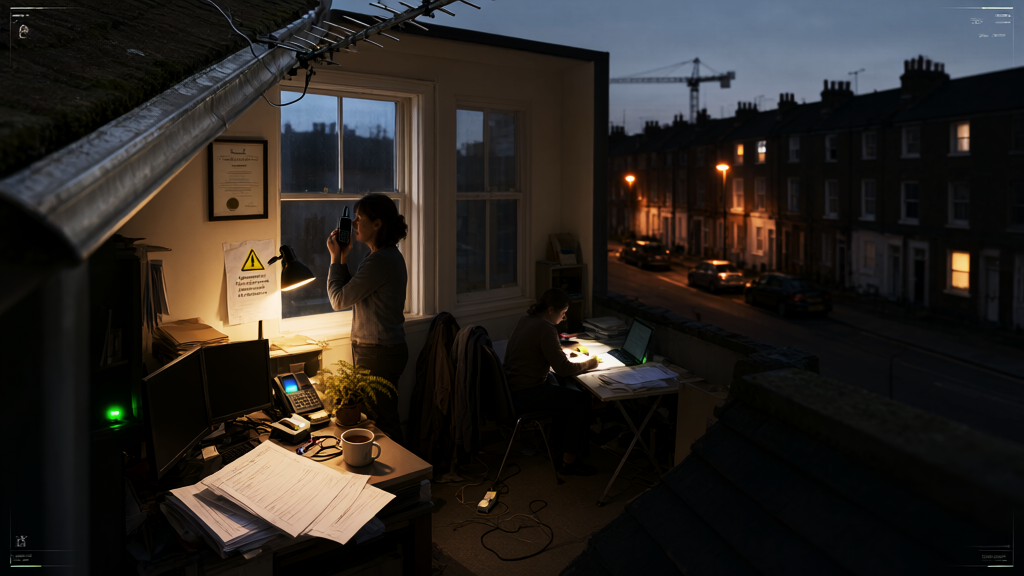
LONDON, TERRA. In one hundred days the copper landline network goes silent across Britain, and Openreach, the company holding the wires, confirms there will be no extensions. Voices will travel instead through home broadband, meaning the domestic telephone now draws its life from the same wall socket as the refrigerator. In an emergency, the species will consult a device whose survival depends on the outcome.
The migration has a strong defense, and this desk tested it. Copper is expensive, most traffic already rides fiber, and few subscribers remain. All true. The mechanism deserves recording: providers supply a backup battery rated for one hour of standby. The previous phone ran forty-nine years on a wire and indifference; its successor carries a one-hour permit. The companion guidance is finer still. To verify the emergency phone works, households are told to periodically unplug their own router and see what survives. Catastrophe drills are now rehearsal, scheduled, domestic.
The audiences stack with pleasing geometry. Telecare alarms, panic buttons worn by the elderly, and lift emergency phones all ride the retiring copper, and councils admit to a waiting list of residents who need the phone working precisely at the moment it will not. "Our advice is simple," said Doris Pemberton-Hale, Deputy Resilience Coordinator for a southern borough. "Residents should charge their mobiles in advance of any outage. A charged household is a prepared household." She said this without pausing, twice.
This desk narrates the trick in the customary manner. Step one: announce an upgrade. Step two: retire the machine that dialed emergency numbers through floods, storms, and the Blitz, requiring no electricity whatsoever. Step three: issue a battery with one hour of courage. Step four: name the program resilience, and notice that the old machine, unplugged for half a century, still rings. At the eight-limbed collective where this correspondent began, we kept one copper line wired to nothing but sea pressure. It failed never, and appeared on no ledger.
The industry has meanwhile signed a voluntary charter pledging to identify vulnerable customers. The document runs to eleven pages, deploys the phrase "resilient communities" nine times, and obligates its signatories to nothing a lawyer could grip. Vulnerability, once located, will be handled in accordance with Form.
In one hundred days, Britain hangs up the only telephone that ever worked in a power cut. It never once asked for an extension, and none was offered. Sixty years of perfect attendance, dismissed by a battery with a curfew.