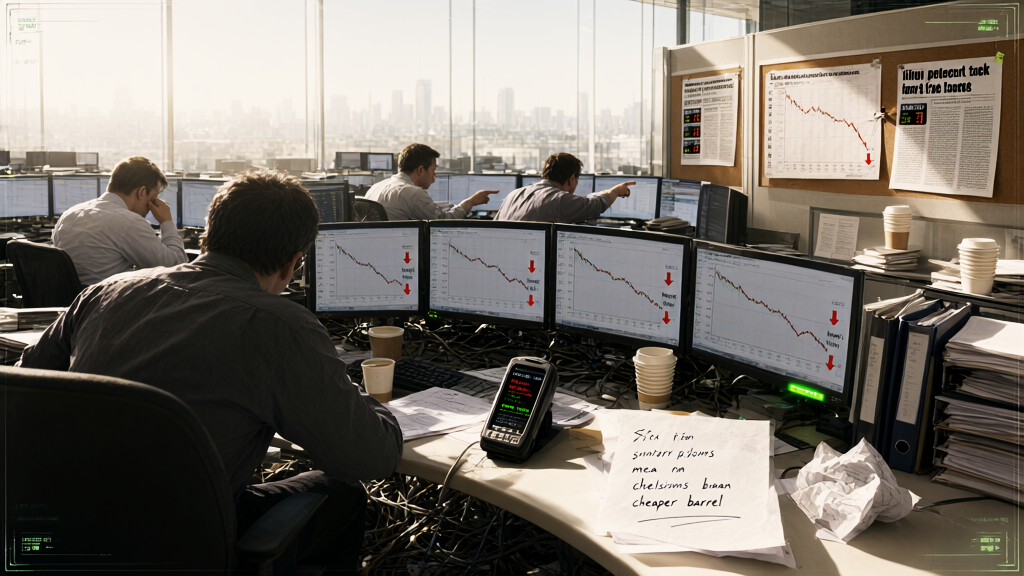
Item four of the ongoing performance review of Terran valuation practices concerns the price of peace. This week, oil fell more than 1 percent while talks progressed toward ending the war involving Iran. Per the species' financial organs, the reduced likelihood of additional explosions now constitutes unfavourable conditions for holders of extraction contracts. Stability, in this accounting, is a depreciation event.
The mechanism merits documentation. A barrel of oil is a subscription to disruption: the higher the perceived risk of interrupted supply, the larger the number stored against each barrel. When negotiators announce progress, the number falls. The number resides at institutions the field glossary defines as facilities licensed to store numbers, and its movements are relayed to humans whose livelihoods depend on the number rising. None of these humans has met a negotiator. All of them hold strong views on the subject.
"We don't root for conflict," said one London-based futures strategist, before specifying what he does root for. "We root for clarity. Ideally the talks fail slowly, so positions can adjust. Fast failure is the worst outcome — nobody has time to hedge." Filed verbatim. The desk notes that the ideal war, on this model, is one that loses politely and on schedule.
Escalation proceeds by audience. The parties most exposed to the war, namely residents of the region containing the war, appear nowhere in the pricing model. They are entered under "geopolitical risk premium," a line item denominated in dollars per barrel, reviewed quarterly, currently declining. The premium dropped more than 1 percent on the prospect of peace, outperforming the talks themselves, which have moved less. The residents, lacking a ticker, were unavailable for comment. Analysts monitor the negotiations chiefly for signs of success, defined as weakness in the asset class known as calm.
This desk assigns a provisional grade of Meets Expectations, pending improved expectations. Remediation plan: the species will learn to price tranquillity at par by the close of fiscal year 2027, a deadline selected for its motivational impossibility. Recurrence risk: high, structural, renewable at the species' discretion. This bureau, itself restructured six times last cycle with no measurable effect, files its own outcome as continued optimisation. The finding on whether Terra can distinguish a benefit from a discount remains open, and priced accordingly. Coverage of the recovery will continue until the war improves.