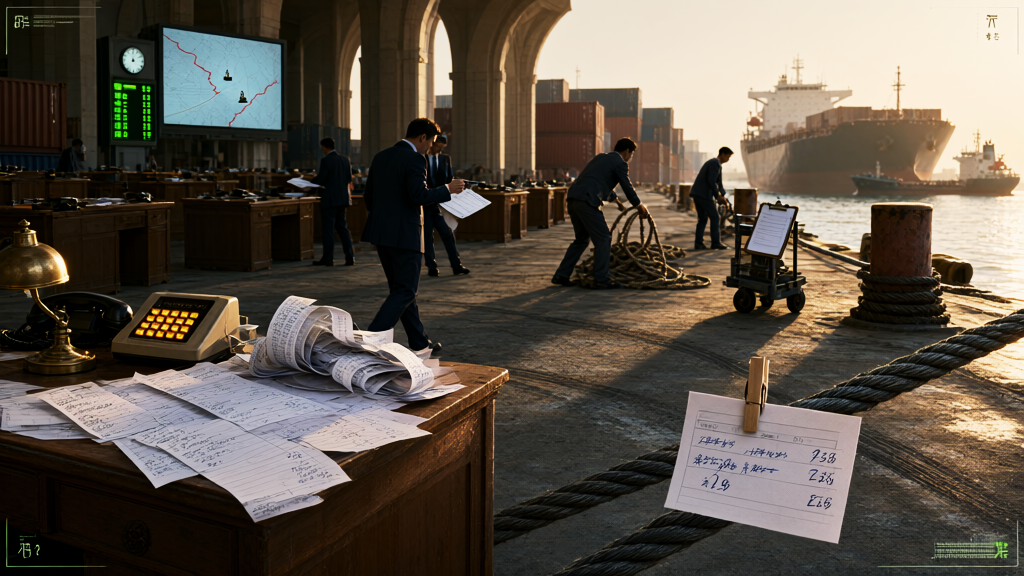
Within ninety minutes of Iran's Islamic Revolutionary Guard Corps Navy announcing that two tankers had "exploded" after hitting mines in the Strait of Hormuz, marine underwriters here had assigned the incident a number. Not a casualty figure. Not a location survey. A rate: an additional war-risk premium, quoted at 0.375% of hull value per transit, issued under the Additional Premium clause of the standard wording, in waters nobody had surveyed and on mines nobody had photographed. Two desks moved their quotations before the announcement finished its second sentence.
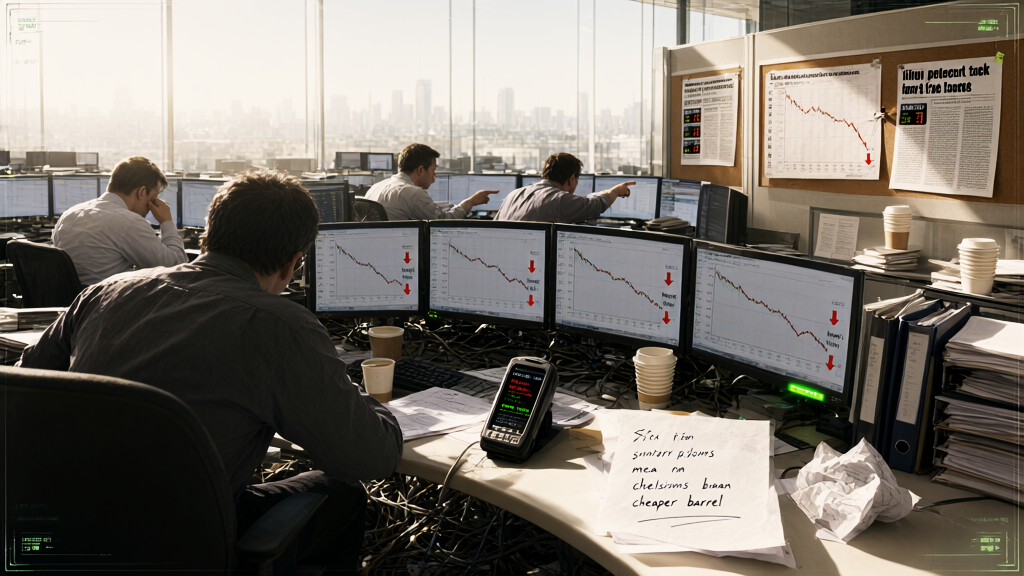
The mechanism is the war-risk trading sheet. When a hazard is rumoured, a desk at a syndicate issues a quotation, and the quotation becomes the hazard. A broker with a firm operating out of this city, who asked to be named only as Gerald, walked me through it: "First we hear there may be mines. So we price the mines. Then the shipping lines read our price and reroute around the mines, which confirms the mines. Nobody has been down there." He said this without lowering his coffee, because the coffee was also priced against the mines.
The bill distributes itself as follows. The shipowner pays the surcharge per transit. The charterer pays it again inside the freight rate. The cargo owner pays it a third time inside the delivered price of fuel, which then invoices every driver, airline, and plastics manufacturer on the planet. The mine itself, an object whose existence remains formally unestablished, appears on none of these documents — it is the only party in the transaction legally entitled to deny it exists, and it exercises the right.
A deputy underwriter for a large London syndicate explained the philosophy: "Our clients are not afraid of mines. They are afraid of not knowing the price of fear of mines. We removed the not-knowing. That is the service." Asked whether the house therefore profits from a danger it may have invented, she said yes, and called it alignment of interests.
By close of business Wednesday the number had risen to 0.5%, on the news that nothing further had happened. The tankers were real, the announcement was real, the premium was real, and the sea — the one party that had actual mines possibly in it — received no invoice, having never signed. The ledger balanced to the decimal. It just doesn't hold water.