The Plymouth School Committee has split over when its members may authorize the teaching of reading, because the document permitting the teaching of reading has not yet been graded by the office that grades documents. The curriculum itself sits in a warehouse, purchased and sealed, awaiting a verdict on whether it may be touched. Until then, the district's youngest residents remain enrolled in the only program operating at full capacity: standing.
Under the Massachusetts Literacy Act, districts must instruct from curricula the Department of Elementary and Secondary Education rates as evidence-based. Plymouth selected a curriculum. The rating is pending. Defenders of the delay argue, with real force, that adopting early risks buying a program the state later declines, stranding public money in cardboard. This is correct as far as it goes. What it does not explain is why the solution to children unable to read is a document requiring adults to read it, grade it, and file it before anyone may proceed to the easier material: sentences about cats.
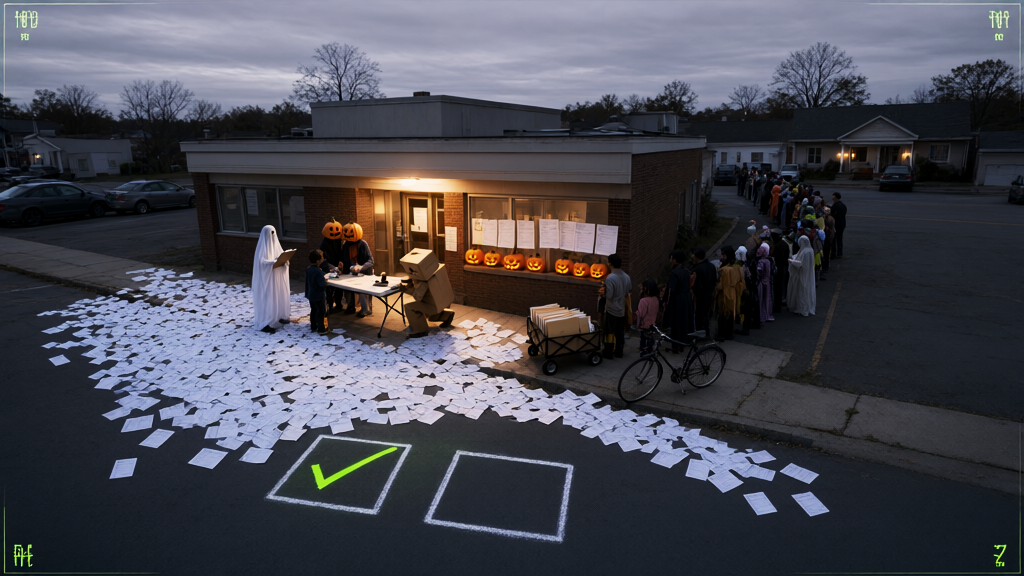
I have observed nine hundred senates and the trick never varies. Step one: the children cannot read. Step two: the adults procure materials. Step three: the state grades the materials. Step four: the committee convenes to determine whether consulting its own earlier vote counts as motion. Step five: while everyone watches the vote, look at the other hand — the one holding Form WR-1, Request to Wait, population of signatories to date: one, and the child did not sign it. My colleagues at the Octopus Collective of Thessk ran governance differently: eight minds, one meeting, and enough legible ink to arm all eight limbs.
"My concern is sequencing," one committee member told this desk, serenely. "If the rating arrives after adoption, children will have learned to read using ungraded paper, and we would have no way of knowing whether it worked." A second member defended the architecture itself: "The state built this process so no child learns from anything nobody above us has finished looking at."
I asked who designed the sequence and was directed to a filing whose motives section is, I am assured, fully registered — in a script neither I nor, reportedly, its author can render legible. The motives, I understand, are excellent. They are simply unavailable to the literate.
By press time, the materials engineered to end the waiting had waited so long they achieved seniority over two budget cycles. The committee has scheduled its next session to determine when it may permit itself to have begun.