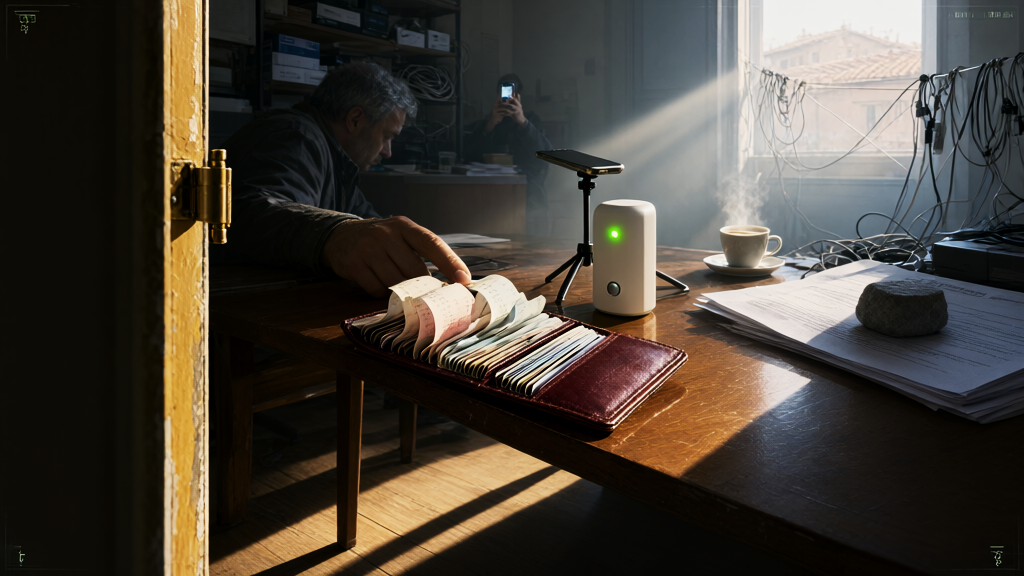
ROME, ITALY. The deputy minister for economy, Adriano Leo, has informed the local population that cutting income taxes and raising pensions requires money. Local media transmitted this as a significant disclosure rather than as arithmetic. The visiting researcher notes that in the Roman Senate of my acquaintance, announcing that promises cost something would have started a riot; here it starts a news cycle.
The mechanism deserves narration, because the trick is old but the hands remain quick. Step one: the governing coalition campaigned on reducing the Irpef, the tax levied on income, which the species treats as voluntary until payment. Step two: the applause. Step three: the appointed officials enter the building marked as a bank, the institution licensed to store numbers, and count the numbers. Step four: they emerge and announce that more numbers would be needed. The reveal is in the fourth step: the hand the audience was watching held a promise. The other hand held the bill for it.
A treasury official who requested anonymity in order to remain employed confirmed the sequence. "We knew the resources were missing when we wrote the commitment," he said. "The commitment was written anyway. Both documents are filed in the same cabinet." He added, serenely, that no one had ever asked which document the cabinet believed.
What elevates the performance is that no opposition figure disputes the arithmetic; the arithmetic enjoys unanimous consent. Contested instead is whether the disclosure counts as governance or as an apology delivered in advance. The species has built a system in which announcing a promise cannot be kept is a distinct profession from keeping or breaking it, with its own hours, its own pension, and — per the ministry's 2023 filing — 40,000 pages of documented motives, all certified sincere, none legible.
My years with the Octopus Collective of Yll taught me that eight hands balance accounts better than two, provided none of them holds both the pen and the receipt. Here the pen writes the promise, the receipt files the motive, and the wallet contains only what the ministry, without irony, calls a plan.