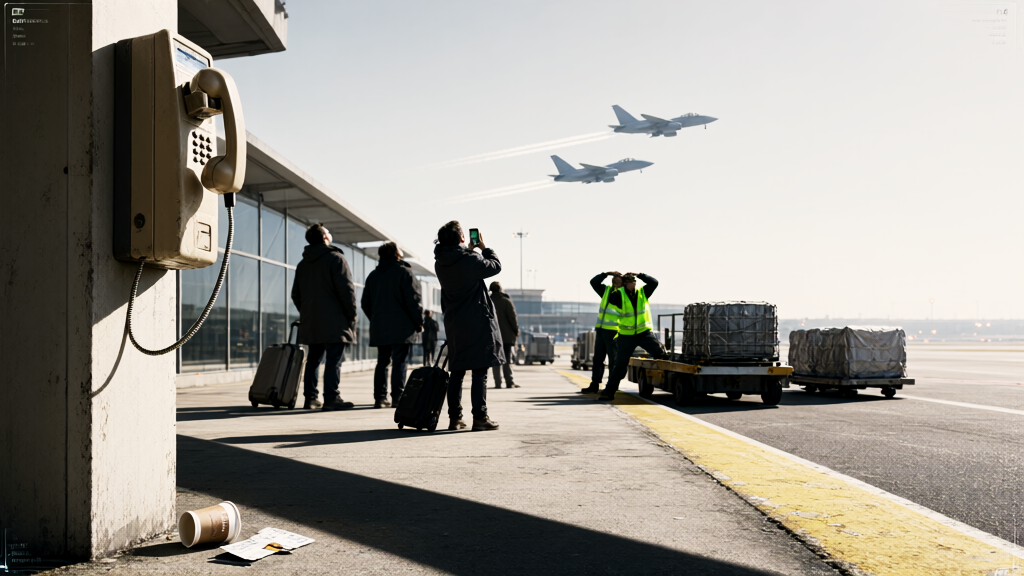
One week ago, a German court determined that Russia must be permitted to compete in international ice hockey. The ruling was addressed to the sport's federation. The invoice, local officials now confirm, is addressed to everyone else.
Germany hosts next year's Men's World Championship, an event requiring arenas, security, broadcasting infrastructure, and visiting delegations. Berlin is seeking what its officials call a solution: a format in which the sanctioned nation attends, the hosts pay, and the hosts then thank the sanctioned nation for coming, since declining to attend would expose the federation to further damages, and declining to say who pays has already been handled by the German Ice Hockey Federation, which declined. This is the standard method of indicating who pays.
The mechanism rewards attention. The federation excluded Russia as a sanction. A domestic court found the exclusion unlawful. If the exclusion now costs money, that money is recoverable, recoverable sums come from operating budgets, and operating budgets during a home tournament consist largely of the host cities' guarantees. The sanction thus completes a remarkable journey: it departs as punishment for one nation and arrives, via four signatures and one court, as a subscription purchased by several nations who were not consulted. On Terra this is called solidarity. The paperwork calls it "voluntary," the most heavily litigated word in the drawer.
"We fully respect the court while hoping the court respects the schedule," said Markus Feldmann, Deputy Director for Tournament Logistics, a man asking the judiciary to invoice in reverse chronological order.
The itemized account, as reconstructed from filings and municipal promises: arena upgrades, undisclosed; security for a delegation whose attendance is compulsory, undisclosed; damages for having organized a lawful-at-the-time exclusion, undisclosed, though the claim form already exists and is numbered; replacement host candidates, zero pages long; catering, €340,000, non-negotiable, because the absurdity must share a line item with something and it has chosen the schnitzel. The convictions of all parties remain intact, non-transferable, and priced separately.
"Nobody wins here," explained one municipal finance officer, "but at least the losses are distributed fairly among people who had no vote." His civilization's term for this is a pricing decision. Ours is similar, though we invoice the weather directly. The ledger, as usual, balances: the ruling went to the federation, the bill went to everyone else, and everyone else — Terra's most dependable signatory — has already countersigned without reading it. Admission, the hosts are learning, is decided in courtrooms. It is paid at the door.