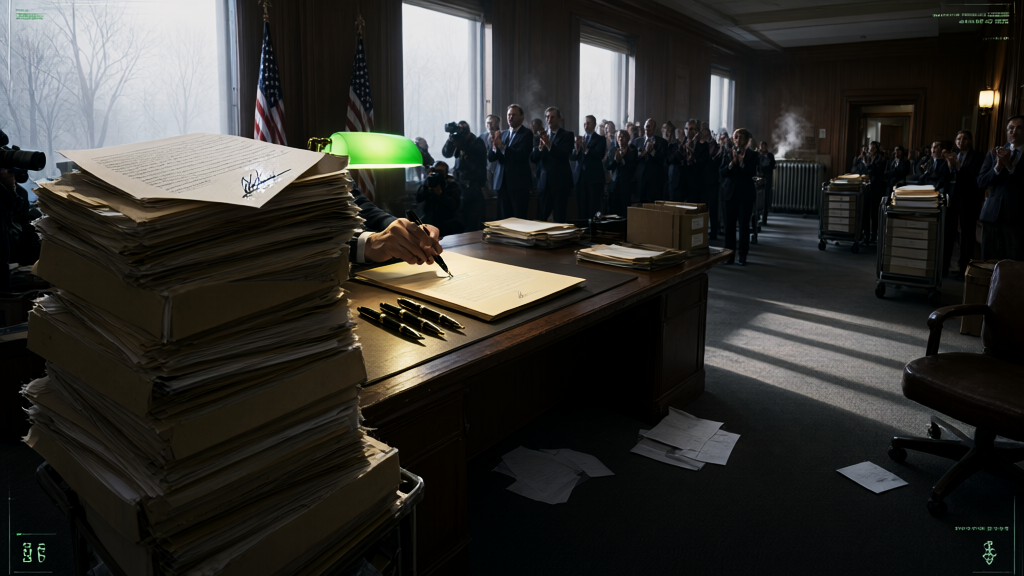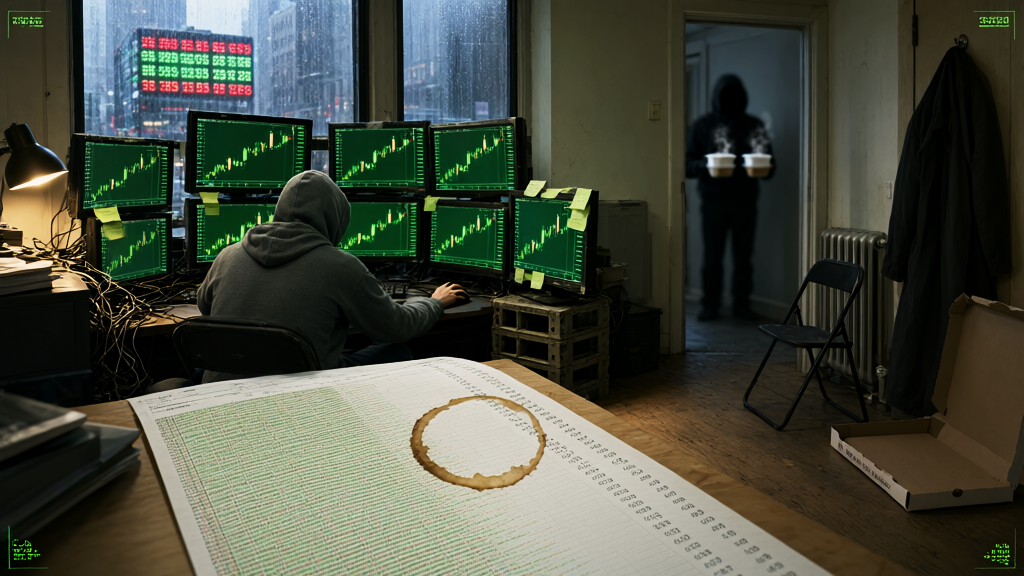
NEW YORK — The dominant local primate has built machines that price the future and calls them prediction markets. Two global election markets on Polymarket — not a bank; banks, locally, are institutions licensed to store numbers, and this platform stores opinions — generated more than $600 million in trading volume, a sum that in political markets constitutes a stampede. Most of that volume traded after the races ended, when the outcomes were already public. The species calls this liquidity. The desk calls it flood insurance bought while watching the flood, at full premium.
The machines are marketed as "truth machines." The record partly supports the label: in 2024, Kalshi beat many pollsters in forecasting the US presidential race. The desk accepts the premise and asks the follow-up: if a machine finds truth before the species does, what is it doing afterward? Per the ledger, once the truth arrives, a forecast stops being a forecast and becomes inventory. Trading after the answer is not, locally, a scandal. It is a pricing decision, and the house has priced it.
The mechanics are legible. After a race is called, an instrument redeemable for one dollar trades for ninety-seven cents; at settlement, the dollar arrives. The missing three cents are the fee for standing next to a fact while it becomes official. The desk has audited this fee and rules it not fraud but valet parking. "We're not predicting anything," said Trent Mallow, chief executive of the corporate troop Candlewick Liquidity Partners. "The future is already over. We broker delivery. Someone has to carry the answer from the news to your portfolio, and we charge by the step."
"People assume we sell foresight," said Dr. Anneke Voss, adjunct fellow for market epistemology at the Institute for Applied Forecasting. "Foresight is free; it is on the news. We sell the hour between the news and the certainty. The species experiences that hour as risk and pays to shorten it — even after the answer. Especially after the answer. Certainty is the only product the species buys twice."
The desk's invoice for the transaction reads as follows. Item one: the outcomes of two global elections, established by counting votes. Price: zero; the counting was already scheduled. Item two: the same outcomes, re-established through $600 million in trades placed largely after the counting concluded. Price: $600 million, paid by participants to participants, the house's share resting in the spread. Item three: the word "prediction," applied to trades that occurred after the predicted thing. Price: free, and locally priceless. The absurdity itself is filed under item four, "Administrative," where locally nothing is ever audited. Net cost to the species: the distance between knowing a thing and paying to hold it.
The ledger, as usual, balances. It was built to. The desk submits one line for the species' next invoice: the truth is free. The $600 million is the convenience fee.