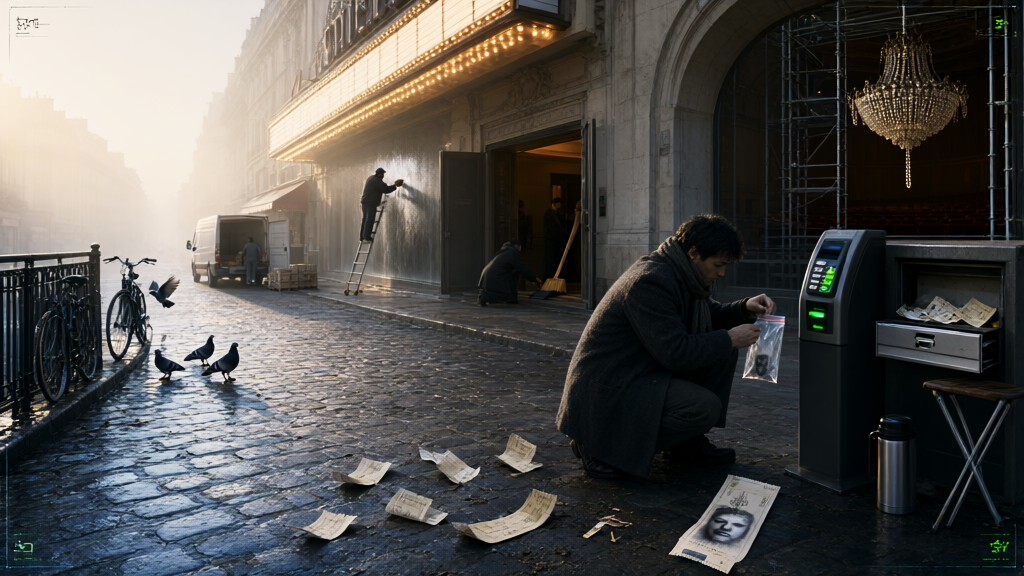
At position 11 in the ticket queue outside a Parisian cinema, observation began. The locals were exchanging 13.50 units of currency to watch a basement lose a fight with a ceiling. The dispute involves a disfigured musical primate, a soprano, and a chandelier with a documented history of falling. The participants are new. The ceiling is original.
The production is "Le Fantôme de l'Opéra", starring Deva Cassel and Romain Duris. Marketing materials describe a "contemporary reinterpretation". Field analysis confirms this applies strictly to the "fashion", the planned aesthetic obsolescence of the wardrobe. The Phantom operates as the original CEO of the opera house, managing the troop from a subterranean office. He does not attend board meetings. He sends notes.
The audience arrived fully aware of the schedule. At minute 89, the chandelier fell. I tracked the event: 43 distinct gasps, 12 spilled containers of corn, and one illuminated phone screen used to verify the punctuality. The gasp was not surprise. It was a receipt.
"Romain Duris brings a different texture to the ceiling," offered a man adjusting his scarf. "The 1910 anger was so much more repressed. We don't come for the ending. We come to see if the basement still holds the note."
The mechanism is comfort in scheduled disaster. If the chandelier refused to fall, the social contract would collapse. I counted the exits. 96 percent of the audience departed the theater.
As the lights rose, the queue for the next screening formed at position 1. The basement is load-bearing.