Physicians gathered here report that colon cancer patients given long-term exercise coaching survived in greater numbers eight years after treatment. The finding is sound. The complication is civilizational: the species spent generations engineering movement out of daily life, installing chairs, vehicles, and elevators with the diligence of a temple crew dismantling a shrine, and has now begun selling the missing ingredient back at clinical rates.
The mechanism deserves attention, because movement is no longer movement once it passes through admissions. It becomes a protocol, with supervision, scheduling, and a paperwork shadow that follows it down the corridor. A local physician explained the transition without visible strain: "For thirty years I wrote prescriptions on this pad," said Dr. Alan Reyes, attending oncologist at a large midwestern cancer center. "Now I write walking schedules. The pad is the same. The difference is that this one works."
The escalation proceeds along a new axis entirely: readiness. Patients recovering from chemotherapy may sit in a waiting room until called to an appointment at which a professional assesses whether they are prepared to walk, using a Physical Activity Readiness questionnaire running seven pages, seven, for locomotion. Somewhere in the building is the queue for the queue. An administrator described the structure to me with the calm of a man reading his own eulogy: "We spent a century building a world where nobody walks. Now we run a program for people who have forgotten how. Enrollment exceeds projections." Sessions are tracked, adherence is logged by wristband, and the counseling is billable in fifteen-minute units, the way sunlight is dispensed.
Observe the trick as staged, step by step. Step one: the diagnosis, delivered with appropriate gravity. Step two: the apparatus, infusion, monitoring, the dignity of the clipboard. Step three: the discovery that the cheapest intervention available to the species is locomotion. Step four: the other hand, which the audience was not watching, and which holds a newly created billing code for ambulation counseling. In my octopus-collective years we managed eight hands apiece and still needed only one to point toward the door marked "outside."
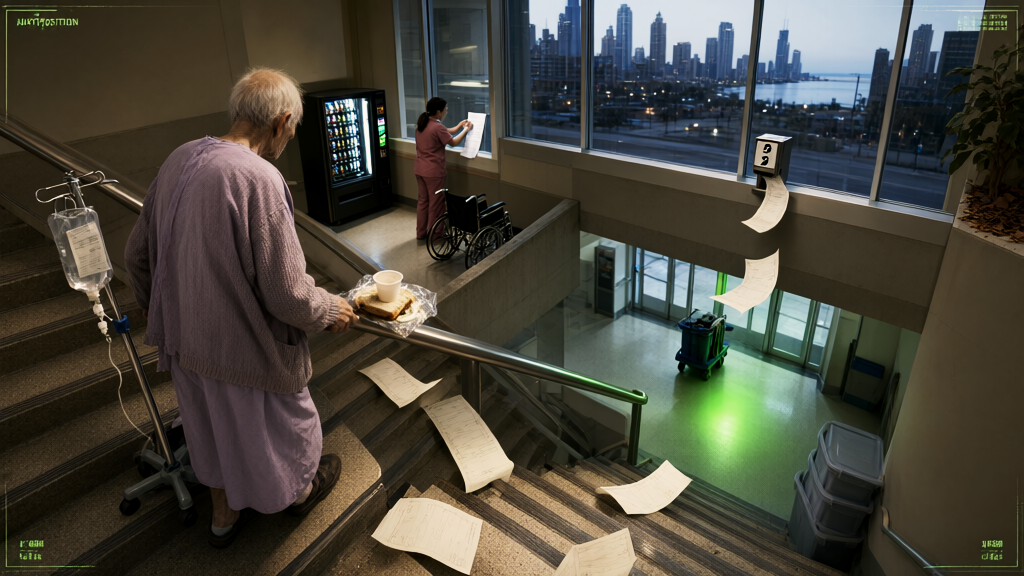
Eight years on, the survivors are alive because they moved, and the institution is solvent because it noticed. My old senate would call this wisdom; it once required all motives to be registered, producing eleven million unreadable pages, so weigh that precedent as you like. The shrine the species dismantled stone by stone is open again for worship. The staircase was always there. The reception desk at the bottom is new.